Which Fire Extinguisher for Which Type of Fire?
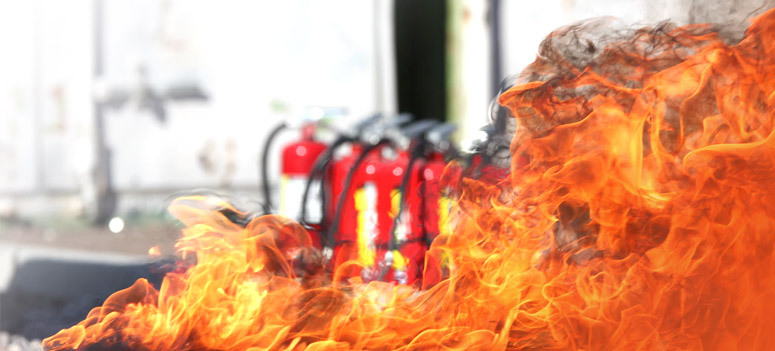
Which fire extinguisher should you choose for each type of fire?
Complete guide to choosing a suitable, compliant fire extinguisher
👉 Which fire extinguisher should you choose for each type of fire?
The choice of a fire extinguisher depends directly on the nature of the fire to be fought. Every fire corresponds to a specific fire class, and every class requires a suitable extinguishing agent. A wrong choice can make the fire extinguisher ineffective and increase the risks to people and property.
In this guide, you will learn which fire extinguisher to use for each type of fire, how to avoid common mistakes and why the support of a fire safety expert is essential for effective, compliant protection.
🔥 Understanding fire classes to choose the right fire extinguisher
Fire regulations sort fires into several categories according to the fuel involved. This classification makes it possible to determine the most effective fire extinguisher for each situation.
Class A fires: solid materials
Wood, paper, cardboard, textiles, solid plastics.
These fires are very common in:
- Offices.
- Stores.
- Schools.
- Administrative buildings.
- Homes.
👉 Water fire extinguishers, foam or ABC powder fire extinguishers are particularly suited to this type of fire.
Class B fires: flammable liquids
Gasoline, solvents, hydrocarbons, paints, alcohol.
Found in particular in:
- Garages.
- Workshops.
- Utility rooms.
- Some stores.
👉 ABC powder fire extinguishers, foam or CO₂ fire extinguishers are recommended.
Class C fires: flammable gases
Butane, propane, natural gas.
👉 Extinguishing must always be accompanied by shutting off the gas supply.
ABC powder fire extinguishers are the best suited to this type of fire.
Class D fires: combustible metals
Magnesium, aluminum, sodium, lithium.
These fires are specific to industrial environments and require special metal-fire powder fire extinguishers.
Class F fires: cooking oils and fats
Vegetable oils and animal fats, especially in commercial kitchens.
👉 Class F fire extinguishers, supplemented by fire blankets, are essential for this type of risk.
🧯 The main types of fire extinguishers and their uses
Water fire extinguishers
Suited to class A fires, with additive versions for certain class B fires.
They are widely used in commercial buildings and public-access buildings (ERP).
👉 See the Water Fire Extinguishers category.
Foam fire extinguishers
Effective on class A and B fires.
They create an insulating barrier that prevents the fire from reigniting.
👉 See the Foam Fire Extinguishers category.
ABC powder fire extinguishers
Versatile fire extinguishers covering A, B and C fires.
Widely used in businesses, warehouses, parking lots and mixed environments.
👉 See the ABC Powder Fire Extinguishers category.
CO₂ fire extinguishers
Ideal for flammable liquid fires and electrical risks.
They leave no residue, which makes them suitable for sensitive equipment.
👉 See the CO₂ Fire Extinguishers category.
Specialty fire extinguishers (class D and F)
Designed for particular risks:
- combustible metals,
- commercial kitchens.
👉 See the categories Class D Fire Extinguishers, Class F Fire Extinguishers and Fire Blankets.
? Which fire extinguisher for which type of fire?
| Fire class | Recommended fire extinguisher |
|---|---|
| Class A | Water, foam, ABC powder |
| Class B | Foam, CO₂, ABC powder |
| Class C | ABC powder |
| Class D | Special metal-fire powder |
| Class F | Class F fire extinguisher, water with additive |
✅ How to choose the right fire extinguisher?
For an effective, long-lasting choice, it is essential to:
- Precisely identify the risks present in your premises.
- Choose certified, compliant fire extinguishers.
- Match the equipment to your activity.
- Plan a consistent placement of the units.
👉 Every site is different: a standard choice is not always enough.
🏢 Fire extinguishers for businesses, ERP and public organizations
Businesses, public organizations and public-access buildings (ERP) must be equipped with fire extinguishers suited to the specific risks of their premises.
Good equipment allows:
- A fast response.
- Limited damage.
- Better protection for occupants.
👉 The choice of equipment must always be made with a global view of the risks.
📞 Get help from a fire safety expert
Choosing a fire extinguisher is not just about a model or a price.
An expert opinion helps you avoid mistakes and ensure truly effective protection.
The Mondial Extincteur team supports you to:
- Analyze your risks.
- Guide you to the most suitable fire extinguishers.
- Secure your premises for the long term.
👉 Contact Mondial Extincteur to benefit from personalized support and make the right choices.
🔔 In conclusion
Every type of fire requires a suitable fire extinguisher. Understanding fire classes and equipping yourself properly is essential to ensure the safety of people and property.
Anticipating risks means protecting yourself.
Relying on an expert means securing effectively.