RIP mano gesintuvas... arba ne!

Jūsų gesintuvas jau kurį laiką veikia ir jūs svarstote, ar ne laikas jį išleisti į pensiją.. Po visko, ką kartu išgyvenote, norėtumėte žengti dar vieną žingsnį kartu su juo, tačiau pavargęs gesintuvas nebegali užtikrinti jūsų saugumo saugumas kaip ir pirmąją dieną.. Ką galiu padaryti? Kaip sužinoti, ar jis tinka tik papuošti, ar jį galima atiduoti į metalo laužą? Ar galima suteikti jam antrąjį gyvenimą ir pratęsti jo gyvavimo laiką? darbo stažas į visus šiuos klausimus ne visada lengva atsakyti... Taigi, čia pateikiame atsakymų santrauką pagrindinė informacija apie šią temą.
Oficialūs reglamentai
Svarbiausias sėkmės veiksnys - turėti gerai veikiančią įrangą pagrindinis reguliavimo tikslasveiksminga apsauga yra labai svarbi, ypač dėl to, kad gesintuvų veiksmingumas priklauso nuo geros priežiūros.
Tai yra standartas NFS 61-919 jame išskiriama du tipai valdymas :
- Patikrinimai, kuriuos gali atlikti naudotojas.
- Techninė priežiūra, kurią turi atlikti kompetentingas asmuo.
Patikrinimai yra savanoriški ir gali būti atliekami kiekvieną trys mėnesiaipatikrinimo metu gamyklos darbuotojai arba kvalifikuotas auditorius patikrina šiuos dalykus:
- Visi prietaisai yra tinkamoje vietoje.
- Jie yra puikiai prieinami, aiškiai matomi ir geros išorinės būklės.
- Naudojimo instrukcijos yra aiškiai matomos, įskaitomos ir nukreiptos į išorę.
- Slėgio indikatoriaus adatėlės yra žaliojoje dalyje (gesintuvų su manometru).
- Kaiščio apsauginės plombos nėra pažeistos ar trūkstamos.
Techninė priežiūra turi būti atliekami kiekvienais metaisbet ką mes turime omenyje sakydami "? kompetentingas asmuo "Tai " sertifikuotoje įmonėje ar organizacijoje dirbantis asmuo, turintis reikiamą išsilavinimą ir patirtį "[1]šis kursas suteikia galimybę gauti diplomą gesintuvo testeris. Atlikęs savo užduotį, inspektorius turi užregistruoti " patikrinimą " ir ant gesintuvo etiketės užklijuoti patikrinimo datą.
Be jų specifinių savybių aptarnavimo ir techninės priežiūros intervalai yra šie:
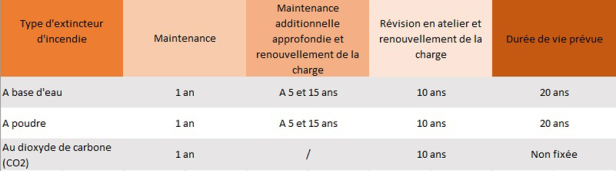
O kaip dėl įkrovimo ir aptarnavimo?
Pagal standartas NFS 61-919, gesintuvai turi būti įkrauti arba net pakeisti po to, kai jie buvo iš dalies arba visiškai panaudoti. Tuomet gesintuvų, su kuriais susijusi ši operacija, etiketės turi būti atnaujintos ir ant jų turi būti užrašyta " " įkrauta" " bei įkraunama įkrovimo data.
Seminaro peržiūratai turi būti atliekama vieno iš gamintojų patvirtintose dirbtuvėse, kurios turi tinkamą įrangą, personalą ir dokumentus. Informacijos šiuo klausimu galima rasti minėto standarto D priede. Tačiau ši operacija gali būti brangi, todėl gali būti naudingiau įsigyti naujas gesintuvas.
Įvairūs dokumentai taip pat buvo parašyti siekiant suteikti naudotojams kuo geresnes gaires:
- APSAD R4 standartas cNPP paskelbtame leidinyje apibrėžiami minimalūs gesintuvų, įrengtų pramonės, prekybos ir paslaugų sektoriaus pastatuose, priežiūros reikalavimai ir jis gali būti naudojamas kaip draudiko ir draudėjo sutarties pagrindas.
- Praktinis nešiojamųjų, kilnojamųjų ir stacionariųjų gesintuvų priežiūros vadovas yra labai geras informacijos šaltinis.
Be to, visada naudinga atlikti žingsniai taip :
- Patikrinkite, ar gesintuvai visada atitinka keliamą pavojų.
- Įsitikinkite, kad jie visada yra tinkamoje vietoje.
- Sužinokite apie rinkoje pasirodysiančias naujas įrangos rūšis.
Įvykdžius šiuos įsipareigojimus, svarbu juos nurodyti saugumo žurnalas kad juos būtų galima veiksmingai stebėti.
[1] http://www.inrs.fr/media.html?refINRS=ED%206054